Markus Anecdotes-Europe While You Sleep: Sleeper Trains From the Netherlands
Written and with Photos by Markus
Europe While You Sleep: Sleeper Trains From the Netherlands

For many people outside Europe, long-distance travel usually means one thing: airports. You book a flight, arrive far too early, stand in security lines, remove your belt for no obvious reason, buy an overpriced sandwich, and eventually squeeze into a seat while somebody reclines directly into your knees. A few hours later you land in another country feeling tired, dehydrated, and slightly confused about what time zone you are in.
Europe still has airplanes of course, and budget airlines are everywhere, but there is another form of travel that has quietly started becoming popular again over the last few years: the sleeper train.
For decades, sleeper trains seemed like something from the past. Many routes disappeared because cheap flights became faster and often cheaper. Night trains slowly gained a reputation as old-fashioned, impractical, or only interesting for train enthusiasts carrying giant cameras and memorizing locomotive numbers. But recently the idea has returned in a surprisingly strong way. Environmental concerns, airport fatigue, rising baggage fees, and the simple desire for slower travel have pushed many Europeans back toward overnight rail travel.
And from the Netherlands, there are now more options than many people realize.
You can board a train in Amsterdam in the evening and wake up in Austria the next morning. You can leave the flat Dutch landscape behind and open your curtains somewhere near the Alps. You can sleep your way across Germany while barely noticing the borders. You can travel toward Switzerland, Prague, Innsbruck, Vienna, or ski destinations without entering an airport at all.
For people in Singapore or many parts of Asia, this can sound almost unreal. Singapore has excellent public transport, but international train travel across multiple countries is still something most people do not experience regularly. Europe, however, was practically built for this style of travel. Countries are relatively close together, rail infrastructure is extensive, and many major cities are connected directly by overnight routes.
A typical modern European sleeper train atmosphere looks something like this:


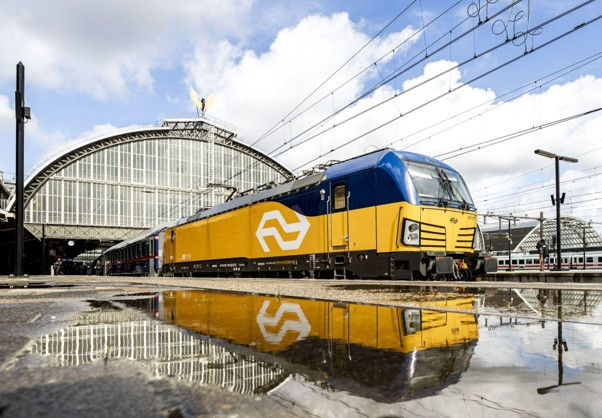

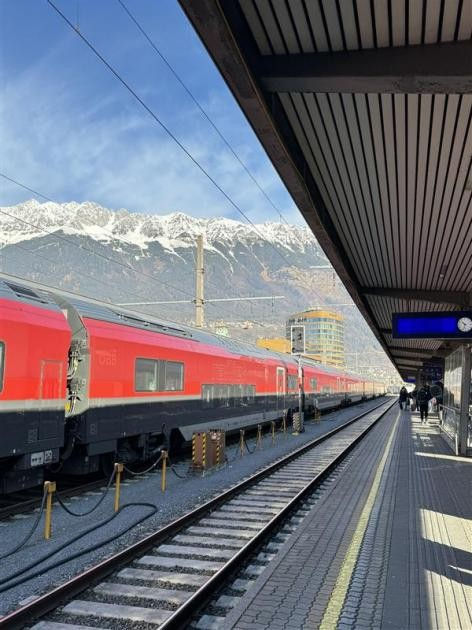
Sleeper trains also come in very different forms. At one extreme, there is the legendary luxury experience represented by the Venice Simplon-Orient-Express, where passengers dress elegantly, drink champagne in polished dining cars, and experience something that feels closer to a moving five-star hotel than normal transportation. At the other extreme, there are ordinary European sleeper trains where six strangers share a tiny cabin while somebody snores like an industrial generator somewhere around southern Germany.
Both versions are technically “sleeper trains,” but the experience is very different.
The luxury side of sleeper rail travel is the version most people recognize from movies, novels, and social media. The Orient Express in particular has become almost mythical. Even people who know very little about trains have heard the name before. Part of that fame comes from the classic Murder on the Orient Express, which permanently linked the train with old-world European glamour and mystery.
Modern luxury sleeper trains still try to preserve that atmosphere. The interiors are filled with polished wood, soft lighting, elegant fabrics, and carefully restored historical details. Dining cars look like something from another century. Some passengers deliberately dress formally for dinner. Instead of eating a sandwich from a vending machine at a station, passengers may enjoy multi-course meals while slowly crossing the European countryside at night.
The experience is intentionally slow. That is part of the attraction.
Modern travel usually focuses on speed. Air travel is designed around efficiency, tight schedules, quick boarding, and maximizing passenger numbers. Luxury sleeper trains take the opposite approach. The train journey itself becomes the destination. Nobody books the Orient Express because it is the fastest way to reach Venice. In fact, flying would obviously be much quicker. People book it because the train creates a specific atmosphere that no airplane can realistically reproduce.
The luxury version really does look more like a hotel than public transport:


Some rooms resemble boutique hotel suites more than train compartments. Staff members provide high levels of service. There are lounges, bar cars, carefully designed menus, and panoramic windows. In many ways, luxury sleeper trains sell nostalgia as much as transportation. They recreate a romantic image of European travel from a time before mass tourism and budget airlines.
Of course, all of this comes at a price.
Tickets on luxury sleeper trains can cost several thousands of euros depending on the route and cabin type. For many travelers, it is a once-in-a-lifetime experience rather than practical transportation. It is not unusual for the cost of one journey to equal an entire budget holiday somewhere else in Europe.
That is why most Europeans using sleeper trains today travel on ordinary services instead.
The real modern sleeper train network is much more practical and much less glamorous. Companies such as ÖBB with their Nightjet services, and newer operators like European Sleeper, have helped bring overnight rail travel back into public attention.
From the Netherlands, several routes are now available either directly or through nearby connections.
Amsterdam to Vienna is one of the best-known overnight routes. There are also sleeper services toward Zürich and Innsbruck. Some routes continue seasonally toward ski regions, which are particularly popular during winter. Travelers heading toward the Alps often prefer sleeper trains because they avoid airport transfers and luggage complications, especially when carrying ski equipment.
The Amsterdam to Vienna route is perhaps one of the most interesting examples of how Europe changes overnight. Passengers leave behind Dutch canals, bicycles, and rain-heavy skies, pass through Germany while sleeping, and wake up approaching Austria’s more mountainous scenery. For travelers who are used to seeing the Netherlands as mostly flat farmland and organized urban infrastructure, this overnight geographical transition can feel surprisingly dramatic.
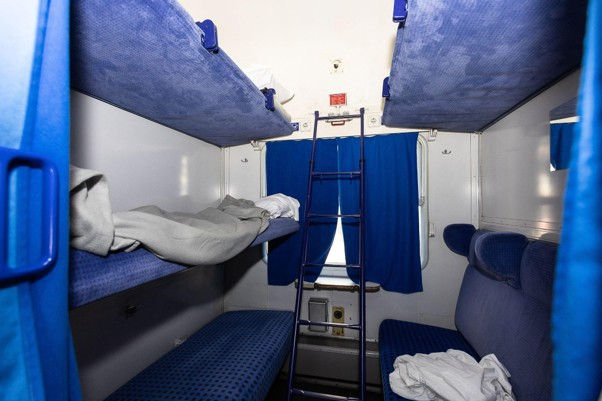
Typical modern sleeper cabins are much more practical and compact than luxury train suites:



The Zürich route is also popular because Switzerland is notoriously expensive to reach by plane once baggage fees and airport transport are included. Sleeper trains allow travelers to arrive directly in the center of Swiss cities without paying for an extra hotel night. Considering how expensive Swiss hotels can be, the economics sometimes start making sense surprisingly quickly.
Innsbruck is another famous destination, particularly during winter. Ski travelers often prefer overnight trains because carrying skis through airports is rarely enjoyable. Airports already create enough stress without adding long metal equipment bags into the situation. Sleeper trains remove some of that frustration. Travelers can simply store equipment, settle into a compartment, and wake up much closer to the mountains.
For many travelers, the biggest advantage of sleeper trains is actually very simple: they save time in a different way than airplanes do.
Flying may technically be faster, but airports consume enormous amounts of time indirectly. Travelers must arrive early, travel to airports located far outside city centers, pass security checks, wait at gates, collect luggage, and arrange transport into the city afterward. A sleeper train usually departs directly from the city center and arrives directly in another city center.
That difference matters more than people sometimes realize.
Instead of leaving central Amsterdam at 4 p.m. to catch a short evening flight, travelers can simply arrive at Amsterdam Centraal later in the evening, board their train, settle into their cabin, and sleep while traveling overnight. The next morning they may already be in Austria or Switzerland without ever dealing with airport terminals.
For environmentally conscious travelers, sleeper trains have also become increasingly attractive. European governments and railway operators have promoted night trains as a more sustainable alternative to short-haul flights. Trains generally produce lower carbon emissions per passenger than airplanes, especially on routes where electric rail infrastructure already exists.
This environmental discussion has become especially important in countries like the Netherlands, Germany, Austria, and Switzerland, where climate concerns are now a major part of public transportation policy.
At the same time, sleeper trains offer something that modern travel often lacks: a sense of gradual movement.
Airplanes disconnect passengers completely from geography. You enter a metal tube in one country and leave it several hours later in another. Trains allow travelers to experience transitions more naturally. Landscapes slowly change. Languages on station signs shift gradually. Architecture evolves as the train crosses regions overnight.
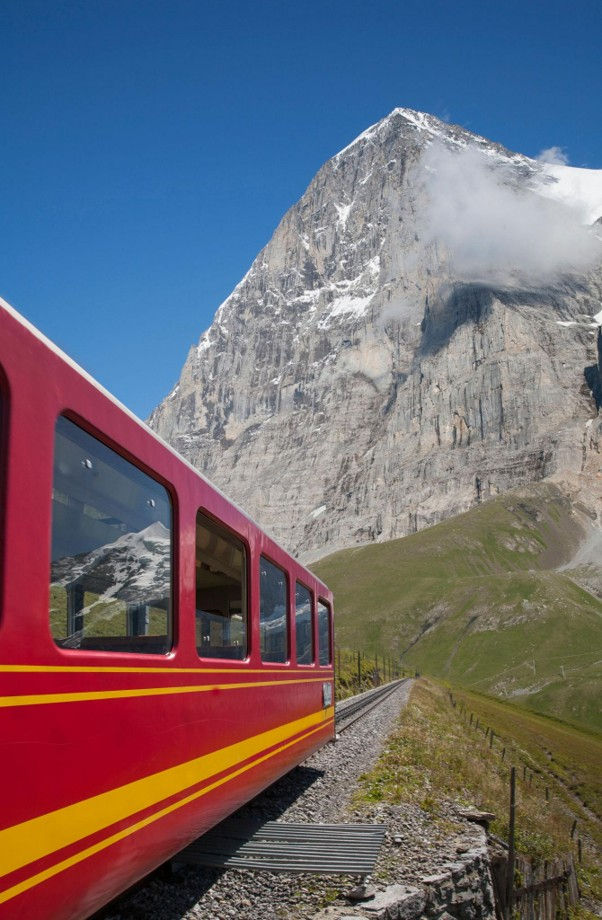
The scenery is one of the biggest reasons people still choose overnight rail travel:



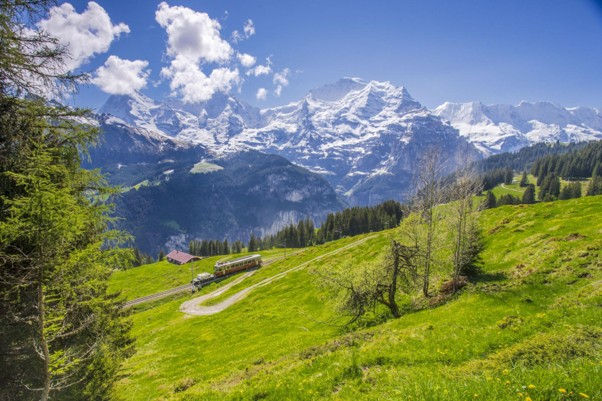

Even people who are not train enthusiasts often describe sleeper trains as feeling more “human” than flying.
That does not mean sleeper trains are always comfortable.
In fact, the ordinary European sleeper experience can sometimes be surprisingly chaotic.
The cheapest tickets usually involve regular seats, which many travelers quickly discover are not ideal for overnight journeys unless they enjoy sleeping vertically while strangers repeatedly walk past them at 2 a.m. More comfortable options include couchettes, which are shared cabins containing bunk beds, usually accommodating four or six passengers.
A couchette is probably the version of sleeper travel most representative of ordinary European rail culture. It is practical, affordable, and sometimes unintentionally hilarious.
Imagine six adults from different countries attempting to organize themselves inside a moving metal box slightly larger than a storage room. Shoes appear everywhere. Somebody inevitably brings food with an extremely strong smell. Another passenger starts unpacking snacks at midnight with the organizational confidence of someone preparing military supplies.
One person falls asleep immediately while another spends three hours trying to arrange a pillow into a medically impossible position.
Then comes the snoring.
European sleeper trains have unintentionally created temporary international communities of exhausted strangers for decades. Within a few hours, passengers may collectively experience border checks, delayed departures, overheated cabins, and the shared confusion of trying to locate a toothbrush while the train moves through rural Germany in complete darkness.
Yet many travelers genuinely enjoy this atmosphere.
It feels less isolated than flying. Passengers sometimes talk to each other. Travelers exchange route recommendations. Backpackers compare itineraries. Families attempt to organize children into upper bunks without causing structural collapse. By morning, people who barely knew each other the night before may already be discussing breakfast options in Vienna.
Private sleeper cabins are naturally more comfortable, though also more expensive. Some offer sinks, small tables, bedding, and better privacy. Higher-end compartments may even include showers and private toilets. These are particularly popular among couples or older travelers who want overnight convenience without sacrificing too much comfort.
The newer generation of sleeper trains has also improved significantly compared with older services. Modern cabins often include charging ports, improved sound insulation, electronic access systems, and more efficient climate control. Some trains even provide breakfast packages delivered directly to cabins in the morning.
Still, sleeper trains remain imperfect.
Delays are common enough that experienced travelers always prepare mentally for schedule changes. Railway infrastructure across Europe is extensive but complicated. Night trains often share tracks with freight traffic, maintenance schedules, and international rail networks involving multiple countries.
A missed connection at an airport is stressful. Missing a sleeper train can be even worse because many overnight services operate only once per day. If something goes wrong, passengers may suddenly find themselves reorganizing entire travel plans in the middle of the night.
Sleeping quality also varies enormously depending on the train, cabin type, and passengers nearby.
Light sleepers may struggle. Some travelers dislike the constant motion. Others discover that train cabins are smaller than expected. Tall passengers in particular sometimes resemble folded furniture while attempting to fit into upper bunks designed by engineers who apparently believed humans stopped growing at around 1.70 meters.
Temperature can also become an issue.
Older sleeper trains occasionally alternate between tropical greenhouse and refrigerated storage container with very little warning. Some passengers wake up at 3 a.m. trying to determine whether they are crossing the Alps or slowly being cooked.
Bathrooms are another important reality check.
Luxury promotional photographs rarely emphasize shared railway toilets at six in the morning after an overnight international journey. Experienced sleeper train travelers usually carry slippers, wet wipes, portable chargers, water bottles, and enough patience to survive temporary plumbing-related disappointments.
Food quality also depends heavily on the operator and route.
Luxury trains obviously provide high-end dining experiences, but ordinary sleeper services are more unpredictable. Some have restaurant cars with decent meals, while others rely mainly on vending machines, station snacks, or food passengers bring themselves.
This creates one of the most recognizable traditions of European train travel: people carrying surprisingly elaborate homemade food onto trains.
At almost any hour of the night, somebody somewhere inside a sleeper train compartment is quietly unpacking sandwiches, boiled eggs, sausages, fruit, crackers, yogurt, or mysterious containers wrapped in aluminum foil. Entire small picnics emerge from backpacks with astonishing efficiency.
European rail culture treats food preparation with remarkable seriousness.
The history of sleeper trains in Europe is also closely connected with the history of Europe itself. Before budget airlines and modern highways became dominant, overnight rail travel was one of the main ways people crossed the continent. Business travelers, tourists, diplomats, students, and migrant workers all relied heavily on international rail networks.
During the twentieth century, sleeper trains connected cities across enormous distances. Passengers could travel from Paris toward Istanbul, from northern Germany toward Italy, or from Amsterdam toward Eastern Europe. Some routes lasted more than an entire day.
Then low-cost aviation changed everything.
Budget airlines transformed European tourism in the late 1990s and early 2000s. Suddenly it became possible to fly across Europe for absurdly low prices. Weekend tourism exploded. Millions of passengers prioritized speed and low ticket costs above all else.
Sleeper trains struggled badly during this period.
Many railway companies reduced investment in overnight services because maintaining sleeper rolling stock was expensive. Some routes disappeared entirely. Others survived only because governments considered them strategically important.
For a while it genuinely seemed possible that European sleeper trains might disappear almost completely.
But travel trends changed again.
People became increasingly frustrated with airport overcrowding, hidden airline fees, and stressful short-haul flying experiences. Environmental concerns also became much more politically important across Europe. Younger travelers in particular started rediscovering rail travel as something slower, calmer, and more environmentally responsible.
Social media helped as well.
Videos showing cozy sleeper cabins moving through snowy mountain landscapes suddenly made overnight rail travel look appealing again. What once seemed old-fashioned started becoming fashionable.
Winter routes toward ski destinations are now especially popular again:


Rail companies noticed this shift quickly.
Several operators invested in modern sleeper carriages with better lighting, improved privacy, cleaner interiors, and more practical designs. Some routes reopened after years of absence. Others expanded.
This does not mean sleeper trains are suddenly cheap luxury experiences available to everyone. Prices still vary enormously depending on demand, route, and booking timing.
A regular seat may be relatively affordable. Shared couchettes cost more. Private sleeper cabins can become surprisingly expensive during holidays or ski season. Booking late usually increases prices significantly.
In some cases, budget airlines are still cheaper.
That reality is important to understand because many romantic articles about sleeper trains avoid discussing actual pricing. A cheap flight from Amsterdam to Vienna may still cost less than a comfortable sleeper compartment. Travelers choosing trains are often paying partly for convenience, sustainability, or the travel experience itself.
However, the comparison is not always straightforward.
When travelers include airport transport, baggage fees, hotel costs, and time savings, sleeper trains can sometimes become more competitive than expected. A sleeper train effectively combines transport and one hotel night into a single expense.
For backpackers and younger travelers, this calculation can make overnight rail travel surprisingly attractive.
Different countries also create different sleeper train atmospheres.
German portions of routes often feel highly organized and efficient, though delays still happen regularly enough to maintain realism. Austrian sleeper services tend to have a slightly calmer reputation, especially on Nightjet routes. Swiss routes are associated with beautiful scenery and very expensive coffee once passengers arrive.
Eastern European rail experiences sometimes feel older, slower, and more unpredictable, but also more adventurous. Travelers looking for polished modern efficiency may prefer western routes, while travelers seeking more traditional railway atmosphere often enjoy eastern connections more.
One interesting aspect of European sleeper trains is how quickly social behavior changes overnight.
During daytime train travel, passengers usually behave similarly to metro commuters: headphones on, minimal conversation, personal space protected carefully. Overnight travel changes this atmosphere completely. People prepare beds, change clothes discreetly, organize luggage, brush teeth in tiny moving bathrooms, and generally accept temporary shared awkwardness with strangers.
It creates a strange form of temporary trust.
Passengers sleep surrounded by people they met only a few hours earlier. Somehow this works surprisingly well most of the time.
The future of sleeper trains in Europe still remains uncertain, but clearly more optimistic than it was fifteen years ago.
New routes continue appearing gradually. Governments increasingly discuss international rail cooperation. Travelers seem more willing to consider slower alternatives to flying, especially for medium-distance journeys.
The Netherlands will likely remain an important part of this network because of its central location and strong rail infrastructure. Amsterdam already functions as a major international railway hub, and demand for overnight travel appears to be growing steadily.
Sleeper trains will probably never fully replace airplanes. They are slower, sometimes more expensive, and occasionally uncomfortable. But they offer something modern aviation largely lost a long time ago: the feeling that travel itself can still be part of the adventure.
Instead of disappearing into an airport and reappearing several hours later somewhere else, passengers experience the gradual movement between countries. They fall asleep while crossing borders. They wake up in unfamiliar landscapes. The journey itself becomes memorable instead of simply efficient.
And perhaps that is the real reason sleeper trains continue attracting people again.
Not because they are perfect.
Not because they are always cheaper.
Not even because they are especially luxurious.
But because in a continent as interconnected as Europe, there is still something uniquely fascinating about boarding a train in the Netherlands at night and waking up somewhere entirely different the next morning.
If you’re interested to take a long distance sleeper train trip in Europe, you’ll find that a single trip covering multiple days not really exist. If you for example want to do a tour like you’re taking a cruise, taking for example a week or two and implement well-structured sightseeing stops at several cities, you’ll find you’ll be using different train companies, hotels near stations and use 1 or more days transfers as a perfect moment to explore cities. Hence compiling a itinerary can be challenging. If you are considering to take such a trip, please do let us know on contact@engagevusg.com / contact@oliveandlatte.com / contact@engageforevents.com and we can recommend an agency depending on your requirements.


Comments