Markus Anecdotes-The Dutch Have a System for Everything — Until They Don’t

There is a moment in every immigrant’s life when you realise you are no longer simply living in another country. You have started adapting to its operating system. For me, living in the Netherlands, that moment probably came when I found myself standing in front of a rubbish bin holding a broken household item and genuinely wondering what administrative category it belonged to. Not whether it was rubbish—that part was obvious—but what kind of rubbish it was. Paper? No. Plastic? Partly. Restafval?

Maybe. Electrical? Technically there was something electrical inside it. Should it go to the milieustraat? Was there a special collection point? Could I simply throw it away without accidentally violating some obscure municipal recycling rule? I stood there looking at this stupid object for far longer than any adult should reasonably spend contemplating garbage.
And then it occurred to me: I had become Dutch enough to believe there must be a correct procedure.
Because in the Netherlands, there is almost always a system. There is a system for your rubbish, a system for your bottles, a system for your bicycle, a system for parking your car, a system for seeing your doctor, a system for paying taxes, a system for receiving parcels, a system for taking public transport and, naturally, a system for reporting that one of the other systems is not working. Usually, these systems work remarkably well. Usually. That last word is important.
Coming from Singapore, I am not exactly unfamiliar with organisation. Singapore can organise things with terrifying efficiency. Give Singapore a queue of 500 people and twenty minutes later somebody will have installed barriers, printed signs, created a QR code and appointed three people in matching shirts to tell everyone exactly where to stand. The Dutch approach feels slightly different. Singaporean efficiency often seems to say, “We will make sure you know what to do.” Dutch efficiency says, “We have already designed a system. Please use it.” Nobody necessarily needs to stand there explaining it because there is probably a website, an instruction sheet, a machine or, increasingly, an app.
After several years in the Netherlands, I have accumulated enough apps on my phone to operate a small European government. I have apps for banking, trains, parking, tax, parcels, supermarkets, healthcare, authentication and several mysterious ones that I apparently downloaded because some machine somewhere once told me I needed them. Sometimes I look at my phone and wonder when exactly it stopped being a telephone and became the control panel for my existence.

Take parking. Once upon a time, parking a car meant finding a space, putting some coins into a machine and walking away. A primitive age. Now I park, take out my phone, open an app, wait for GPS to determine where I am, check that I have the correct parking zone, start the parking session, lock the phone and walk away. Approximately twenty minutes later, usually when I am already inside a shop, I experience a sudden moment of terror: Did I actually start the parking? Out comes the phone again. Yes, it is running. €1.84. €2.17. €2.53.
There is something deeply unsettling about watching money disappear in real time. At least an old-fashioned parking meter had the decency to take your money all at once.
Then, after shopping, I return to the car, drive away and ten minutes later experience the opposite moment of terror: Did I stop the parking? Technology has improved our lives enormously. It has also given us entirely new things to worry about.
Public transport is another beautiful example of Dutch system-thinking. Conceptually, the railway network is magnificent. You arrive at the station, tap in, take your train, transfer somewhere, arrive at your destination and tap out. The NS app tells you which platform you need, where you have to change, how many minutes you have for the transfer and whether there is a delay. When everything works, it feels as though the entire country is one enormous machine. I can sit in Tilburg and know that somewhere near Utrecht a train I haven't even boarded yet is currently two minutes late.
That is an extraordinary amount of information to have about a train that is still fifty kilometres away from me. Unfortunately, once you have that information, those two minutes become personally offensive. I refresh the app. +2 minutes. Refresh. +3. Refresh again. +5. Now something is happening. Then comes the explanation: signal failure, defective train, staff shortage, an incident on the track or some weather-related problem. This is when one of my favourite Dutch contradictions appears.
The Netherlands has spent centuries holding back the North Sea, reclaiming enormous areas of land from water and building some of the most sophisticated hydraulic engineering on Earth. This country basically looked at an ocean and said, “Move.” But occasionally some leaves fall onto railway tracks and everyone goes, “Hmm. Complicated.”
Perhaps this complicated relationship with the elements explains why weather apps are taken so seriously here. Before living in the Netherlands, I thought checking the weather meant looking at the forecast in the morning. Here, weather checking can become tactical. Can I walk the dog now? Check Buienradar. Can I cycle somewhere? Check Buienradar. Can I put something outside? Check Buienradar.

Can we sit on the terrace? Check Buienradar. Should I leave now or wait twelve minutes? Definitely check Buienradar.
Dutch weather forecasting is sometimes less like meteorology and more like military intelligence. You don't merely want to know whether it will rain today. You want to know whether there is an eighteen-minute operational window between two blue blobs moving across Brabant. Sometimes it works beautifully. You look at the radar and see rain approaching in twenty-three minutes.
Shoes on, dog ready, go. Other dog walkers seem to have made exactly the same calculation. Everyone is moving with purpose because somewhere above Belgium a cloud is approaching. The dog, naturally, has no respect whatsoever for meteorological urgency and decides that this is precisely the moment to spend four minutes investigating one particularly fascinating patch of grass.
If I manage to get home just as the first drops begin to fall, I experience an absurd sense of accomplishment. I close the door, the rain starts properly thirty seconds later and I feel as though I have personally defeated nature using nothing more than a smartphone.
The Dutch preference for systems becomes even more obvious when dealing with government administration.
DigiD is probably one of the best examples. After living here for a while, DigiD becomes so normal that you forget how strange it sounds when you explain it to somebody unfamiliar with the Netherlands. It is essentially your digital key to a large part of official Dutch life. Government services, taxes, municipal matters, healthcare-related administration and many other official processes can all be accessed using the same digital identity. The basic idea is excellent. Instead of proving who you are separately to dozens of organisations, there is one secure system.
Everything is wonderful until the day the system asks for additional verification. Then the adventure begins. Open the app, enter the code, scan the document, hold the phone against the passport. Nothing. Move the phone slightly. Nothing. Turn the passport around. Still nothing. Remove the phone case because somehow you have convinced yourself that the phone case is now interfering with the Dutch government. Try again. Suddenly the phone vibrates. Don't move. At this point I always feel slightly ridiculous, sitting at the kitchen table pressing my passport against my smartphone as though I am attempting to transfer my citizenship via Bluetooth.
Eventually it works. Success. Wonderful. I can continue. Then the next page loads and announces: “An error has occurred.”
Of course it has.
The fascinating thing about Dutch bureaucracy is that even when something goes wrong, the chaos is usually organised. There is always a button, a reference number, a department, a procedure and somebody who is technically responsible. The adventure is discovering which one. Websites are particularly good at this. A government or company website might ask, “Which situation applies to you?” followed by options A, B, C and D. Your situation is clearly E. Unfortunately, E does not exist.
So you read the choices again. Perhaps B is close enough. You click B. Three questions later, you realise you have accidentally informed the system that you are a divorced agricultural entrepreneur living on a boat. Back. Try C. Somehow that is even worse. Eventually you discover that your actual situation does exist, but it is hidden under a category you would never logically have selected. This is the digital equivalent of entering a building through the wrong door and continuing to walk through increasingly inappropriate rooms because you are now too committed to turn around.
Customer service can then introduce you to another masterpiece of system design: the circular instruction. You have a problem with the online form, so you call customer service. The person asks whether you have completed the online form. You explain that you cannot complete it and that this is precisely why you are calling. They tell you that you need to complete the online form. You explain again that the form isn't working. They suggest contacting customer service. You point out, as politely as possible, that you are currently doing exactly that.
There is sometimes a beautiful silence at this point. For one glorious second, two human beings on opposite sides of a telephone line recognise that they have reached the edge of civilisation. The system has folded back onto itself. Then, usually, the person finds another procedure. There is always another procedure.
Appointments are another area where Dutch system-thinking becomes part of everyday life. Dutch people don't merely use calendars; sometimes it feels as though the agenda is one of the fundamental instruments of civilisation. In Singapore, it is entirely possible for someone to message in the afternoon and ask, “Dinner tonight?” A few hours later, several people have somehow materialised around a table. Try introducing that degree of spontaneity into certain Dutch social circles and you may accidentally trigger a planning meeting.
“Dinner tonight?”
“Tonight?”
“Yes.”
“As in today?”
“Yes. That's generally what tonight means.”
“Hmm. Let me check.”
And then the agenda appears.
Suddenly you are negotiating with NATO. Tuesday is swimming. Wednesday is parents. Thursday there is a work dinner. Friday already has something. Saturday is a birthday. Next Saturday they are away. The following weekend somebody is visiting. Eventually someone says, “What about the 17th?” You look at the calendar and realise it is currently the 3rd.
At first I found this strange. Now I check my own agenda before answering.
This is what I mean when I say that eventually you stop merely living in another country and start running its operating system yourself.
The same structured approach appears in healthcare. You generally don't simply wander into your GP because you woke up and decided today would be a nice day to discuss your knee. You call, explain the problem and make an appointment. There is a process. There is a sequence. There is structure, and most of the time I appreciate it because systems create predictability and predictability creates efficiency.
The interesting moments arrive when your situation doesn't fit the process. Then the Dutch system looks at you, you look at the Dutch system and neither of you is entirely certain what should happen next.

Supermarkets provide smaller, harmless versions of the same experience. The Netherlands has embraced self-checkout enthusiastically, and I actually like it. Scan, beep, scan, beep, pay, leave. Efficient. Minimal human interaction. Perfect.
Until the screen suddenly displays one word: CONTROLE.
Random check.
A member of staff walks over and begins scanning several items from my shopping. Immediately I feel guilty. I have done nothing wrong. I know I have done nothing wrong. Yet the moment somebody starts checking my groceries, my brain begins conducting an internal criminal investigation. Did I scan the milk? Obviously. What about that onion? Yes. Wait, did I scan both avocados? Why am I nervous? Why am I trying to look innocent? What does an innocent supermarket customer normally do with their hands?
“Everything is fine,” the employee says.
Of course everything is fine.
I walk away with the emotional relief of somebody who has just been acquitted in court.
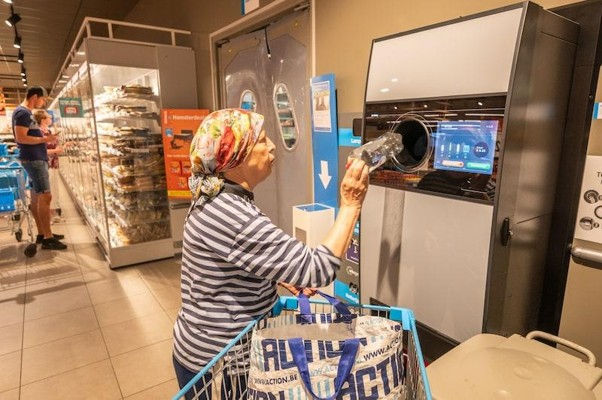
Then there is the statiegeld machine, perhaps one of the purest expressions of Dutch system culture. The idea is straightforward: you pay a deposit on many bottles and cans, then return them to a machine and receive the deposit back. Environmentally sensible, financially sensible and easy to understand.
Until the machine rejects your bottle.
You insert it. The machine considers your offering and sends it back. Fine. Turn the bottle slightly. Try again. Rejected. You inspect it. It is definitely a bottle. It has a barcode. It possesses every visible characteristic of an object that this machine was specifically built to consume. Try again. Rejected.
Now someone is waiting behind you.
This changes the situation completely.
You are no longer recycling. You are performing.
You wipe the barcode, although you have absolutely no scientific reason to believe this will help. You straighten the bottle. You rotate it. You insert it carefully. Rejected again. Another person joins the queue. The pressure increases. You begin to feel that the entire Dutch circular economy is depending on your ability to persuade this machine to accept one Coca-Cola bottle.
Then, without any obvious reason, the machine accepts it.
Nothing changed. You did not repair the bottle. You did not enter a secret code. The machine simply changed its mind.
Fifteen cents.
Victory.

Parcel delivery is another wonderful example of a highly organised system occasionally producing a beautifully unorganised result. A modern parcel can be tracked across half of Europe with extraordinary precision. I can receive a notification telling me that my parcel has left a distribution centre, reached another distribution centre, been sorted, loaded into a vehicle and is now expected within a particular time window. At times it feels as though I have more intelligence about the movements of a €19 online purchase than governments once had about military convoys.
Then comes the final notification: “Delivered to neighbour.”
Which neighbour?
That apparently is where technology ends and community detective work begins.
Now I am looking at houses. Number 12? Number 14? Across the street? Maybe the neighbour two doors down? Eventually someone opens a door holding my parcel and I realise that the most sophisticated logistics network in Europe has completed the final metre of its journey using the ancient system of “ask around.”
And that, perhaps, is what I have gradually come to enjoy about the Netherlands. The country loves systems, but underneath all those apps, procedures, appointment calendars, digital identities, QR codes and automated machines, there is still an unexpectedly practical human layer. When the official method stops working, somebody often just finds another way.

A complicated process can end with, “Just send me an email.” A perfectly scheduled appointment can become an informal conversation over coffee. A train journey calculated to the minute can be destroyed by a malfunction somewhere near Utrecht. A parcel tracked across several countries can finish its journey in the hallway of a neighbour whose surname you don't know. A bottle-return machine equipped with scanners and software can sometimes be defeated by turning the bottle around and trying again.
It is not that the Dutch system has failed. Improvisation seems to be the unofficial backup system.
I notice this most when I think about how much my own behaviour has changed. I now check the weather before doing things that once required no meteorological planning. I check an app before parking. I check another app before taking a train. I make appointments for things I once would have handled spontaneously. I separate rubbish without thinking about it. I save bottles because throwing away fifteen cents now feels morally unacceptable. I keep letters containing reference numbers because I have learned that a reference number can become the most important object in your life approximately six months after you decided it was useless.
Most importantly, I have developed the Dutch belief that if something exists, there is probably a procedure for it.
This confidence occasionally gets me into trouble.
Recently I was trying to do something completely ordinary and found myself standing in front of a machine that refused to cooperate. I had followed the instructions. I had scanned what needed scanning. I had checked the screen. I tried again. Nothing happened. There was, naturally, a QR code offering additional information. I scanned that too. A website opened. The website wanted me to accept cookies. I accepted the cookies. Then it explained approximately six things that were not my problem.
I went back to the machine.
Still nothing.
I pressed the obvious button.
Nothing.
I tried again.
Nothing.
At this point I had done everything modern European civilisation had trained me to do. I had followed the instructions, consulted the digital information and interacted correctly with the system.
A Dutch man standing nearby had apparently been watching this performance.
He walked over.
“Doesn't work?”
“No.”
He looked at the machine for perhaps two seconds.
Then he reached underneath, pressed a small button I hadn't even noticed, and the machine immediately came to life.
I stared at it.
He looked at me.
“Zo.”
And walked away.


Comments